ServicesWisdom Teeth Removal
Wisdom Teeth Removal in Hickory Creek
Wisdom teeth are easier to take out before they swell, crowd or get infected. We look at how yours sit, give you a straight answer on whether they need to go, and help you plan the date and the cost so it fits your life.
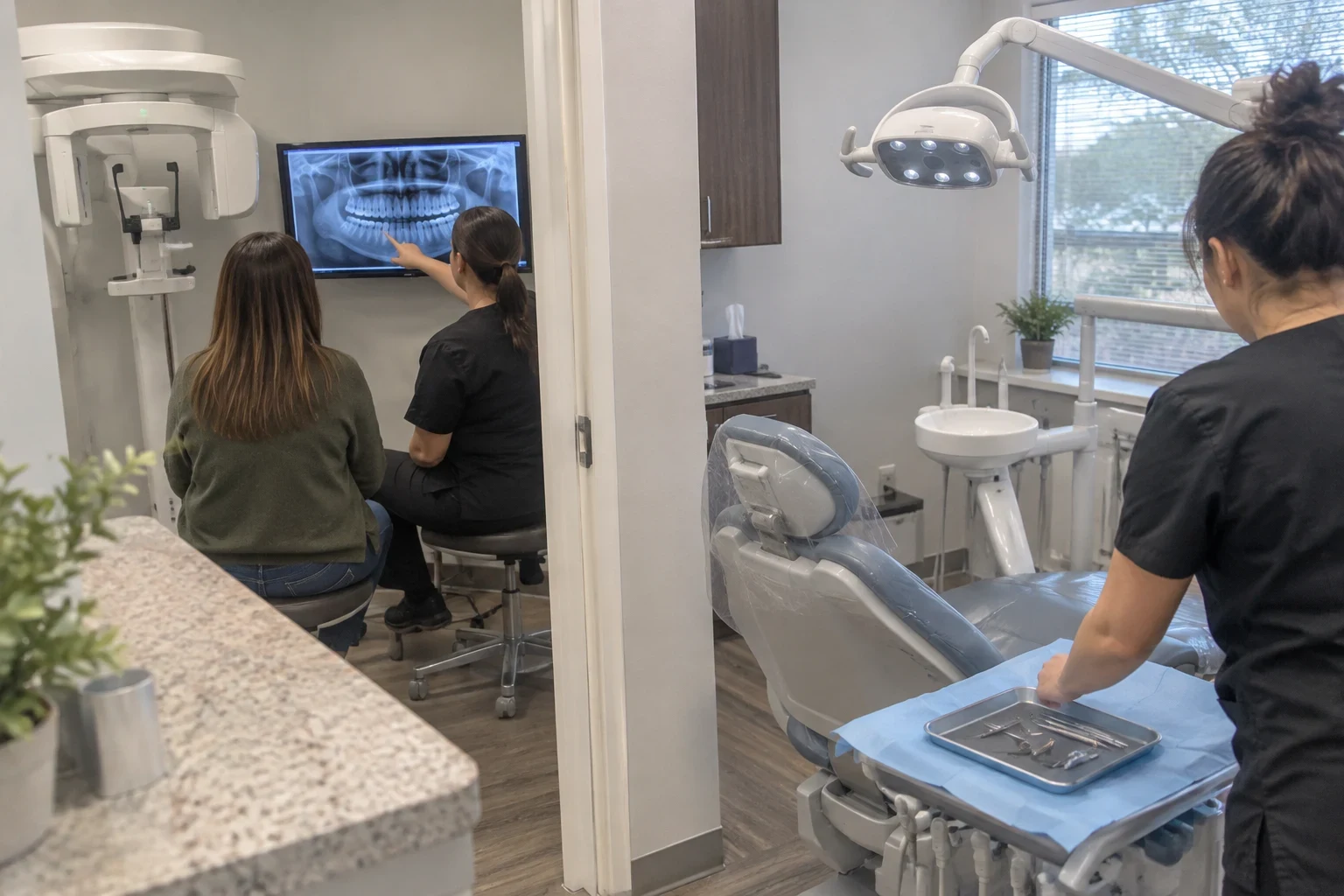
When wisdom teeth should come out
Most people get their wisdom teeth in their late teens or twenties. Some come in straight and cause no trouble. Many don't. They get stuck under the gum, grow in sideways, or come in partway and leave a flap of gum that traps food.
Not every wisdom tooth has to go. If yours are healthy, fully in and easy to clean, we will tell you that and leave them alone. If an X-ray shows a tooth pushing on the molar in front of it, or a pocket that keeps getting sore, it is usually better to remove it on a calm day than wait for a bad one.
We bring over 10 years of experience in general and implant dentistry to this work. That means we read the X-rays closely and plan around the nerve and the sinus before we ever pick up a tool.
What your wisdom teeth visit includes
- Exam and digital X-rays
- We check each wisdom tooth, the gum around it and the teeth next to it. Digital X-rays show the roots and the angle of the tooth.
- 3D scan when the roots are close
- Lower wisdom teeth often sit near the nerve that gives feeling to your lip and chin. When a tooth looks close, we take a CBCT scan so we can see exactly where it is before we plan anything.
- A written treatment plan
- You get a plan that says which teeth need to come out, which can stay, and what each part costs. You can take it home and think it over.
- Removal with numbing
- We numb the area well and check that it is fully numb before we start. Teeth that are still under the gum may be taken out in sections, which is gentler on the bone around them.
- Aftercare and a follow-up check
- You leave with gauze, written instructions and a clear idea of what the next few days will feel like. We see you again to make sure the sockets are healing the way they should.
Signs your wisdom teeth need attention
Sore gum at the back of your mouth
A gum flap over a half-erupted tooth can trap food and get infected. If it keeps flaring up, it will likely keep coming back.
Pain or pressure behind your molars
A tooth growing in at an angle can push on the molar next to it. That pressure can show up as a dull ache in your jaw or even your ear.
Bad taste or smell that won't clear
Food packed around a partly erupted tooth can cause a bad taste even after brushing.
Swelling or a stiff jaw
If it hurts to open your mouth wide, or one cheek looks puffy, get it looked at soon. Swelling means infection is a real possibility.
A cavity on the tooth in front
Wisdom teeth that sit tight against the second molar make that spot hard to clean. Decay there can cost you a good tooth if it goes on too long.
What affects the cost
We give you the cost in writing before any work starts, so the number on your plan is the number you plan around. The price comes down to how many teeth, how they sit and what your coverage looks like. Planning ahead also lets you time the work to your insurance year or a financing plan.
How the teeth sit
A tooth that has fully come in is a simple removal. A tooth still in the bone, or lying on its side, takes more time and costs more.
Number of teeth
Taking out all four at one visit usually costs less overall than coming back for each one later.
Whether a 3D scan is needed
Teeth close to the nerve need a CBCT scan. Our $25 focused evaluation covers a comprehensive exam, digital X-rays, a CBCT scan if needed, treatment planning and a consultation.
Insurance and payment options
We are in-network with 15+ major PPO dental insurance plans. If you have no insurance, ask about our in-house membership plan. We also offer 0% interest financing for up to 24 months, with no credit score impact to check for preapproval.
How it goes, from first visit to healed
- 1
Look and plan
We take X-rays, add a 3D scan if the roots need a closer look, and talk through what we see. If removal makes sense, we set a date that works around school, work or travel.
- 2
Removal day
Eat a light meal beforehand unless we tell you otherwise. We numb the area, check it, and remove the teeth. Most visits take about an hour, depending on how many teeth and how deep they sit.
- 3
The first few days
Expect some swelling and soreness for two to four days. Ice, soft food and the instructions we give you do most of the work. No straws or smoking, since that can pull out the clot and cause a dry socket.
- 4
Follow-up
We check the sockets about a week later. If something feels off before then, you can reach us by phone and we will talk you through it or bring you in.
Wisdom teeth questions
Do all four wisdom teeth have to come out?
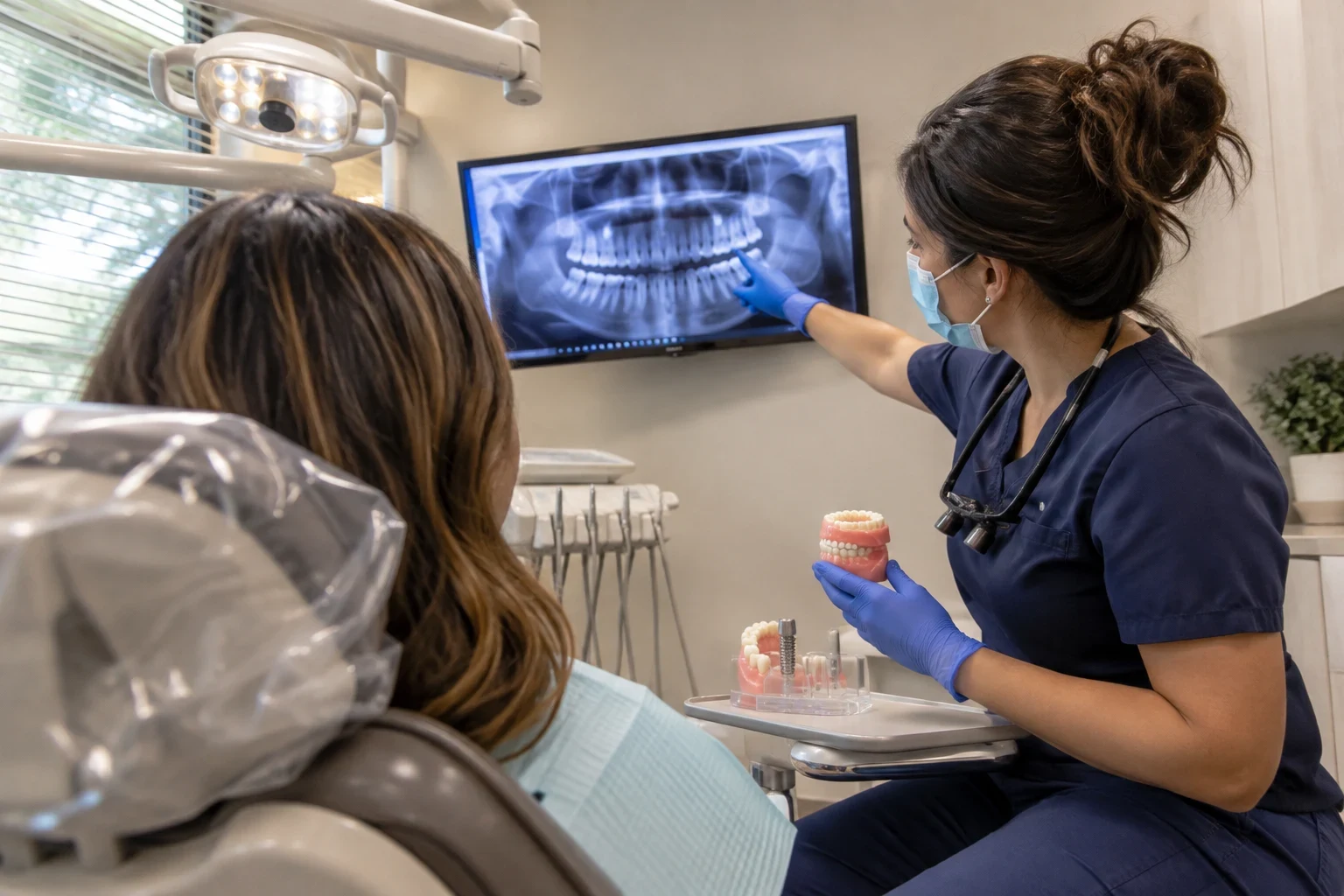
No. We only recommend removing the ones that are causing trouble or are likely to. Healthy teeth that are fully in and easy to clean can stay. We will show you on the X-ray why each tooth is on the list or not.
Will I be awake?
Yes. We numb the area so you feel pressure but not sharp pain, and we check before we begin. If you are nervous, tell us on the phone and we will walk you through every step before the day comes.
How much time off should I plan for?
Most adults take one to three days off. Swelling usually peaks around day two and then eases. Students often schedule removal at the start of a school break so they have time to rest.
What is a dry socket and how do I avoid it?
A dry socket happens when the blood clot in the socket comes loose too early, leaving the bone exposed. It hurts more than normal healing. Skip straws, smoking and hard spitting for the first several days, and follow the rinse instructions we give you.
Is there a best age to have them removed?
Late teens to mid twenties is often easiest, because the roots are not fully formed and the bone heals faster. Adults of any age can have them out, though. The X-ray tells us more than the birthday does.
Plan it now, not at 2 a.m. with a swollen jaw
A quick look now tells you whether your wisdom teeth can stay or should come out, and what it would cost. Patients come to us from Hickory Creek, Lake Dallas, Corinth and nearby towns.