ServicesDentures
Dentures in Hickory Creek, TX
Missing several teeth, or tired of a denture that slips? We make full and partial dentures, plus options that snap onto dental implants. We look at your gums, bone and budget first, then give you a clear plan before anything gets made.
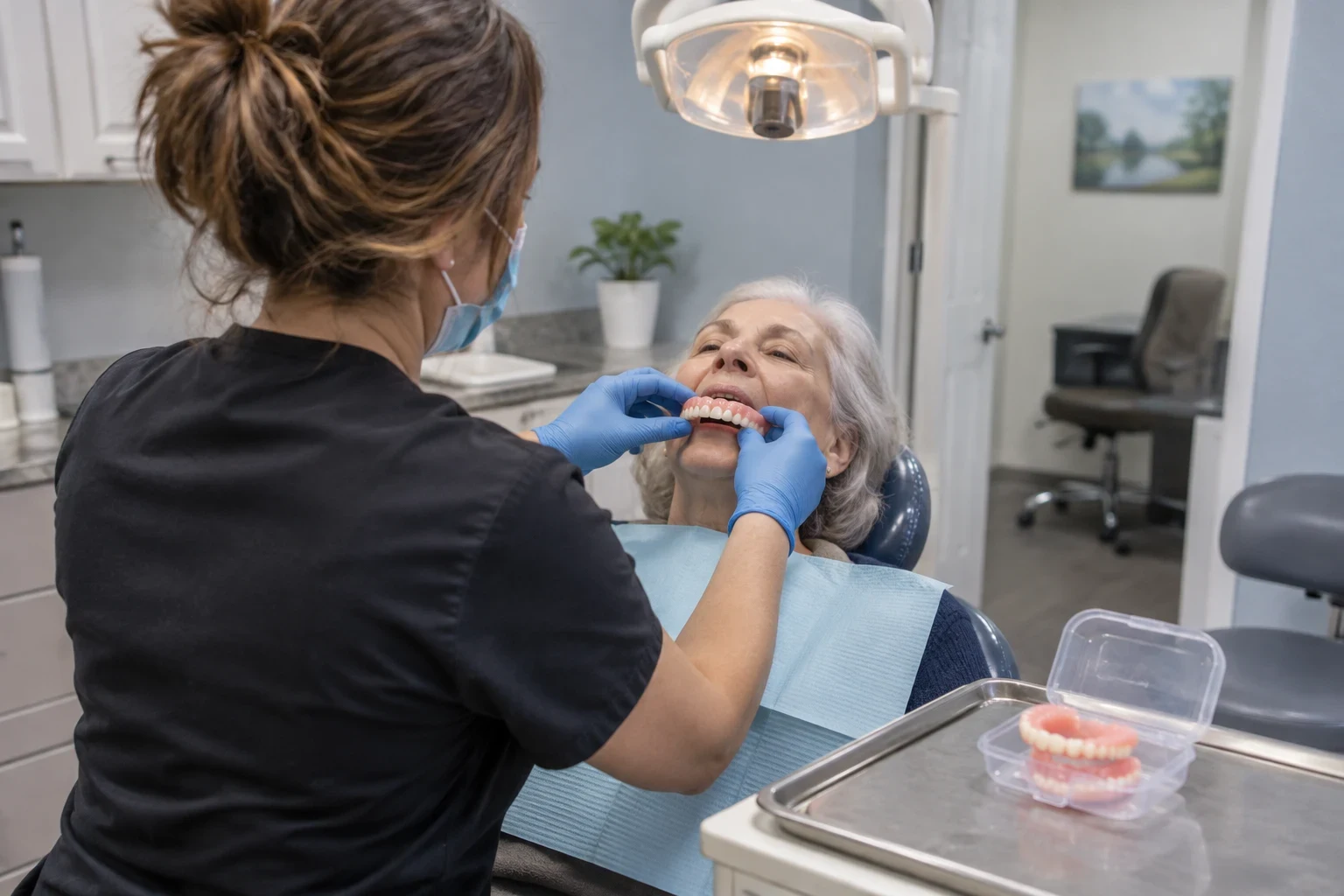
When Dentures Are the Right Call
Dentures replace many teeth at once for less than replacing each one with an implant. A full denture replaces a whole arch. A partial fills gaps and clips to the teeth you still have. For some patients, a denture held in place by two or more dental implants is the better long-term answer, because it stays put when you chew.
The best time to plan is before a loose tooth turns into a painful one. If your teeth are failing slowly, we can map out which ones to keep, which to remove, and what the denture will look like. That way you are not making big choices in a hurry.
Our dentist has over 10 years of experience in general and implant dentistry, so we can talk through a regular denture and an implant-retained one side by side and help you pick what fits your mouth.
What Our Denture Care Includes
Full dentures
A complete set for the upper or lower arch. We shape the teeth and gum color to look like you, not like a stock set.
Partial dentures
A frame that fills the spaces and holds onto your remaining teeth. It keeps those teeth from drifting into the gaps.
Immediate dentures
Made ahead so you leave with teeth on the day we remove the old ones. Your gums shrink as they heal, so these need relines later.
Implant-retained dentures
The denture snaps onto dental implants placed in the jaw. It holds much better than a denture held by suction alone, which matters most on the lower jaw.
Relines and adjustments
Gums and bone change over time. We reline the fit and smooth sore spots so an older denture stays comfortable.
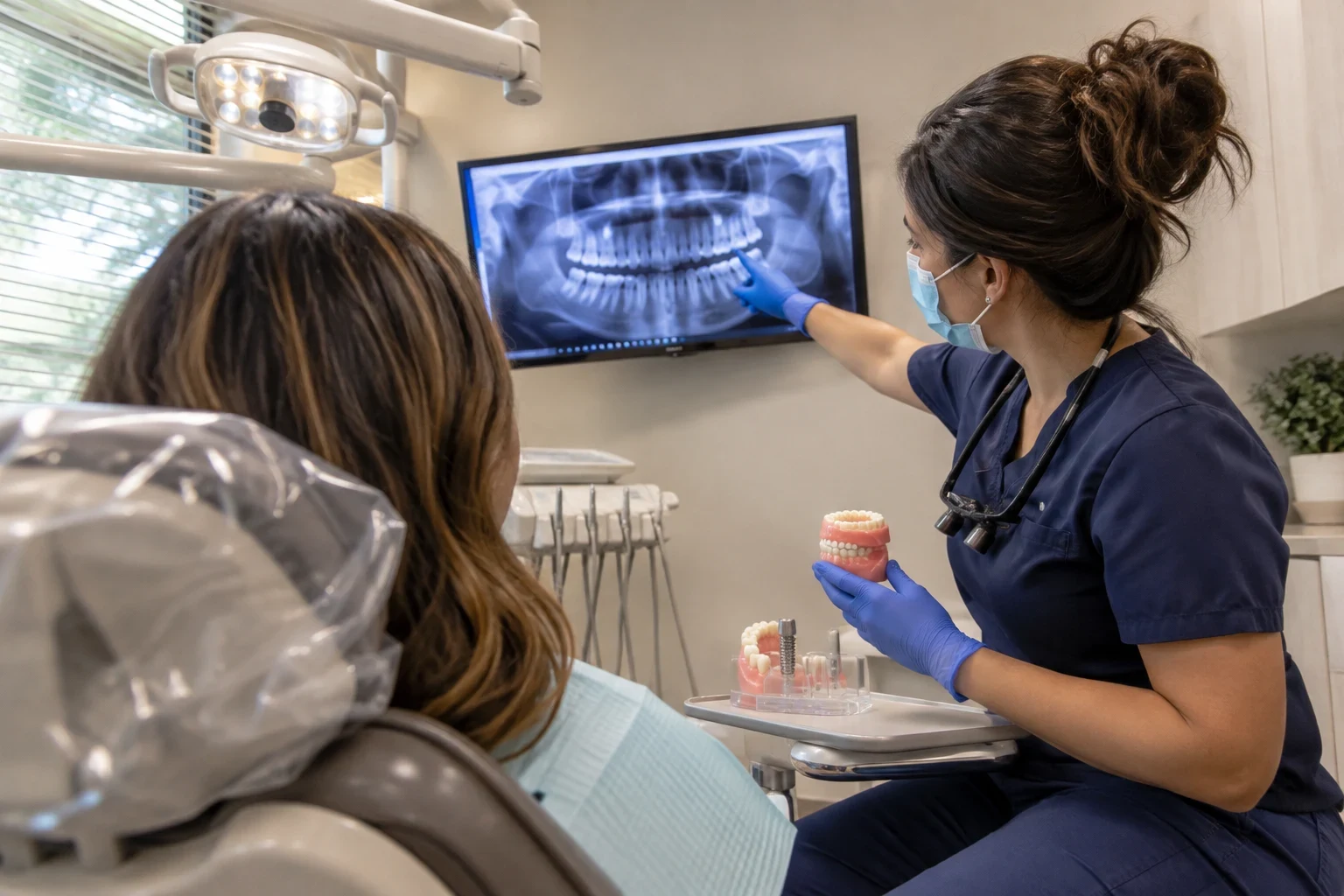
Signs It Is Time to Talk About Dentures
- Several teeth are missing
- Gaps on both sides make chewing hard and let the other teeth shift. A partial or full denture brings back your bite.
- Teeth are loose or failing
- Gum disease or deep decay in many teeth can make saving each one cost more than it is worth. We will tell you honestly which teeth are worth keeping.
- Your denture slips or clicks
- Bone shrinks after teeth are gone, so a denture that fit years ago can float. A reline, a new denture or implants can fix that.
- Sore spots that do not go away
- Rubbing from a poor fit can cause raw spots. Those should be checked, not covered up with more adhesive.
- You avoid certain foods
- If you cut everything small or skip meat and raw vegetables, your teeth are holding you back. That is worth a visit.
How Getting Dentures Works
- 1
Exam and plan
Our $25 focused evaluation covers a full exam, digital X-rays, a CBCT scan if needed, and treatment planning. You leave knowing your options and what each one costs.
- 2
Remove teeth if needed
If some teeth have to come out, we handle the extractions gently and can place an immediate denture the same visit.
- 3
Impressions and bite
We take molds and record how your jaws meet. You help choose tooth shape and shade.
- 4
Try-in
You see and feel a wax version before the final one is made. We change what does not look or feel right.
- 5
Delivery and follow-up
We fit the finished denture and show you how to clean it. Follow-up visits adjust any spots that rub while you get used to it.
What Moves the Cost of Dentures
The price depends on how many teeth you are replacing and what has to happen first. We write out each step and its cost before we start, so nothing comes as a surprise. We are in-network with 15+ major PPO dental insurance plans, and patients without insurance can join our in-house Membership Plan.
- Full or partial
- A full arch and a partial with a metal frame are built differently, and that changes the cost.
- Teeth to remove first
- Extractions and any bone smoothing add to the total. Some patients spread them over a few visits.
- Implants or not
- Adding dental implants raises the cost but gives a denture that stays put. If an implant fails during the 4-month healing phase, our warranty covers it and we replace the implant.
- Immediate versus later
- Immediate dentures mean you are never without teeth, but they usually need relines as your gums heal.
- How you pay
- We offer 0% interest financing for up to 24 months, and checking for preapproval has no credit score impact.
Denture Questions We Hear Most
- How long does it take to get used to dentures?
- Most patients need a few weeks. Speech and chewing feel odd at first, then settle. Start with soft foods and come back for adjustments if anything rubs.
- Should I get immediate dentures or wait?
- Immediate dentures mean you never go without teeth. The tradeoff is that your gums shrink while healing, so the fit loosens and needs relining. Waiting gives a closer fit from the start. We will go over both with you.
- Can my denture snap onto implants?
- Often, yes. We place implants in the jaw and fit a denture that clips onto them. Your CBCT scan shows whether you have enough bone, and an existing denture can sometimes be changed to fit.
- Will my insurance cover dentures?
- Many PPO plans pay part of the cost. We are in-network with 15+ major PPO plans and will check your benefits before we start. If you do not have insurance, ask about our Membership Plan.
- How long do dentures last?
- With good care, a denture lasts years, but your mouth keeps changing. Plan on relines along the way and a new set when the fit can no longer be fixed. Yearly checkups help catch problems early.
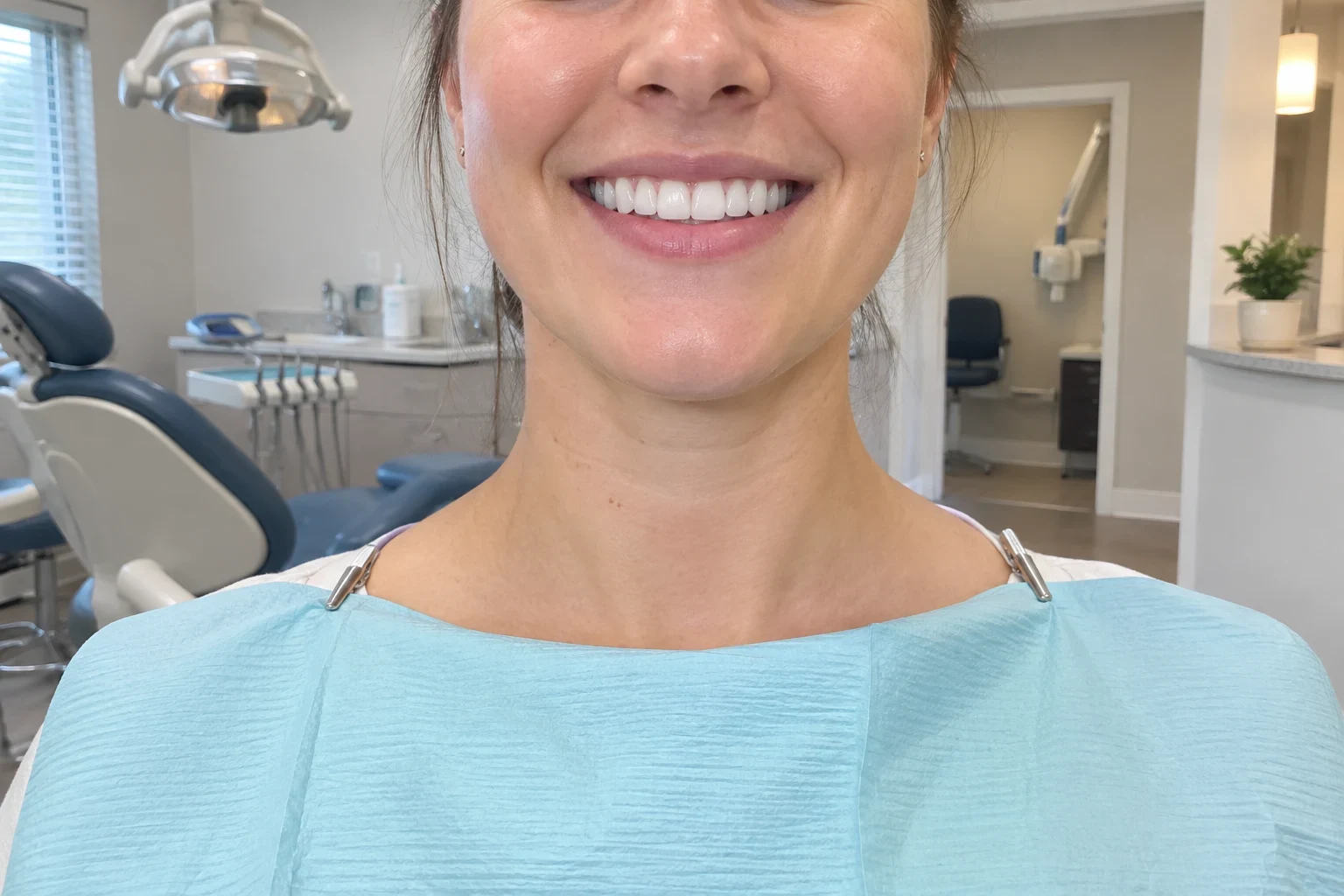
Plan Your Dentures Before It Gets Painful
Patients come to us from Hickory Creek, Lake Dallas, Corinth and nearby. Start with a $25 focused evaluation and walk out with a clear plan and real numbers.